



The History of Amber: The Secrets of the Origin and Heritage of Baltic Amber
The origin and ancient secrets of amber
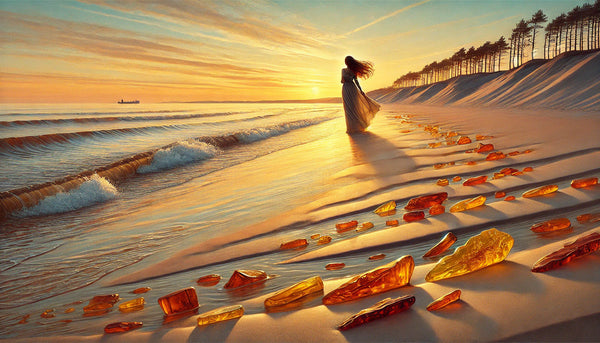
Ancient people valued natural amber as a special material with healing properties. The history of amber begins with a huge organic process - the hardening of tree resins damaged by natural factors. According to scientific data, Baltic amber was formed over 40-60 million years. when pine resins, carried along the shores of the Baltic Sea, fossilized and acquired various shades of color - from golden and light yellow to dark red and black. This material not only decorates, but also symbolizes the cycle of nature and renewal.
In ancient cultures, amber was used as ancient amber jewelry , as well as as a healing agent. The Greeks and Romans valued the properties of amber, believing that it protected against disease and negative energies. At that time, natural amber was an integral symbol of spiritual protection and warmth.
The history and cultural heritage of amber
The use and symbolism of amber have changed over the centuries, reflecting cultural changes. In the Middle Ages, tribes in the Baltic region used amber as a talisman of protection and health, and its unique structure inspired both works of art and practical objects. Amber jewelry has become not only a fashion statement, but also a part of heritage, conveying traditions and the wisdom of nature.
In modern jewelry, Baltic amber retains its importance - it is used in both classic and modern design concepts. The distinctive shapes, individual pieces of amber and unique colors reflect both historical heritage features and the latest fashion trends. As a result, the history of amber and its processing technologies are constantly being improved, in order to maintain the authenticity of the material and its healing power.
Healing properties and practical applications of amber
In addition to its aesthetic beauty, the history of amber is closely linked to its healing properties. In ancient medicine, amber was used as a natural preparation that helped strengthen immunity, reduce inflammation and promote harmony in the body. These properties remain relevant today - many people choose amber jewelry as an additional source of protection and energy.
The healing value of amber is particularly important for those seeking natural solutions for health and well-being. Due to its warmth and unique structure, natural amber helps create a calming environment, reduces stress, and promotes inner balance.
The history of amber is not only a story about an ancient natural wonder, but also a constant reflection of cultural heritage, connecting the past and the present. Baltic amber remains one of the most valuable stones, whose healing properties, unique colors and inimitable beauty inspire new directions of creativity. Whether you are a lover of ancient amber jewelry or are looking for natural healing solutions, the history of amber provides a deep understanding of the significance of this material and its unfading value.
The significance of Klaipėda and other coasts
In addition to the Curonian Spit, the Klaipėda area and other coastal areas of Lithuania are also a significant source of Baltic amber. In these areas, the active action of the sea and the rich diversity of nature help to collect natural pieces of amber, which have been valued as precious stones and used for trade since the 16th–17th centuries. The first written evidence of amber collection in Lithuania dates back to the 10th century BC , when it was valued not only as a decoration, but also as a healing material.
Amber cultural heritage and trade traditions
Over the centuries , Baltic amber has acquired a special symbolic meaning. The ancient Greeks and Romans, and later the medieval and modern times – both Lithuanians and other inhabitants of the countries surrounding the Baltic Sea – used amber as a protective talisman, a healing remedy and a work of art. Medieval documents testify that amber jewelry was an important commodity on trade routes, and in the second half of the 19th century, industrial amber mining began in the Curonian Lagoon region, helping to strengthen the economic and cultural identity of the region.
Curonian Spit – the birthplace of amber
In Lithuania, the largest amount of Baltic amber can be found in the Curonian Spit , a unique geographical area that has been included in the UNESCO World Heritage List since 2000. The constant impact of sea waves and sand dynamics in this area cause pieces of amber to naturally wash up on the shore. Traditionally, this area has been a paradise for amber seekers - since the Middle Ages, collectors have been collecting material here, which later became an important source of jewelry and art.


